And that is all.

Click Me! Support The Keith Richards Home For Aging Sluts

Friday, August 29, 2008

Orwell: "Politics and the English Language" 1946


DAVID BOWIE ~ 1984


Most people who bother with the matter at all would admit that the English language is in a bad way, but it is generally assumed that we cannot by conscious action do anything about it. Our civilization is decadent and our language -- so the argument runs -- must inevitably share in the general collapse. It follows that any struggle against the abuse of language is a sentimental archaism, like preferring candles to electric light or hansom cabs to aeroplanes. Underneath this lies the half-conscious belief that language is a natural growth and not an instrument which we shape for our own purposes.

Now, it is clear that the decline of a language must ultimately have political and economic causes: it is not due simply to the bad influence of this or that individual writer. But an effect can become a cause, reinforcing the original cause and producing the same effect in an intensified form, and so on indefinitely. A man may take to drink because he feels himself to be a failure, and then fail all the more completely because he drinks. It is rather the same thing that is happening to the English language. It becomes ugly and inaccurate because our thoughts are foolish, but the slovenliness of our language makes it easier for us to have foolish thoughts. The point is that the process is reversible. Modern English, especially written English, is full of bad habits which spread by imitation and which can be avoided if one is willing to take the necessary trouble. If one gets rid of these habits one can think more clearly, and to think clearly is a necessary first step toward political regeneration: so that the fight against bad English is not frivolous and is not the exclusive concern of professional writers. I will come back to this presently, and I hope that by that time the meaning of what I have said here will have become clearer. Meanwhile, here are five specimens of the English language as it is now habitually written.

These five passages have not been picked out because they are especially bad -- I could have quoted far worse if I had chosen -- but because they illustrate various of the mental vices from which we now suffer. They are a little below the average, but are fairly representative examples. I number them so that i can refer back to them when necessary:

    1. I am not, indeed, sure whether it is not true to say that the Milton who once seemed not unlike a seventeenth-century Shelley had not become, out of an experience ever more bitter in each year, more alien [sic] to the founder of that Jesuit sect which nothing could induce him to tolerate.

    ~ Professor Harold Laski (Essay in Freedom of Expression)

    2. Above all, we cannot play ducks and drakes with a native battery of idioms which prescribes egregious collocations of vocables as the Basic put up with for tolerate, or put at a loss for bewilder . ~ Professor Lancelot Hogben (Interglossa)

    3. On the one side we have the free personality: by definition it is not neurotic, for it has neither conflict nor dream. Its desires, such as they are, are transparent, for they are just what institutional approval keeps in the forefront of consciousness; another institutional pattern would alter their number and intensity; there is little in them that is natural, irreducible, or culturally dangerous. But on the other side, the social bond itself is nothing but the mutual reflection of these self-secure integrities. Recall the definition of love. Is not this the very picture of a small academic? Where is there a place in this hall of mirrors for either personality or fraternity?

      ~ Essay on psychology in Politics (New York)

    4. All the "best people" from the gentlemen's clubs, and all the frantic fascist captains, united in common hatred of Socialism and bestial horror at the rising tide of the mass revolutionary movement, have turned to acts of provocation, to foul incendiarism, to medieval legends of poisoned wells, to legalize their own destruction of proletarian organizations, and rouse the agitated petty-bourgeoise to chauvinistic fervor on behalf of the fight against the revolutionary way out of the crisis. ~ Communist pamphlet

    5. If a new spirit is to be infused into this old country, there is one thorny and contentious reform which must be tackled, and that is the humanization and galvanization of the B.B.C. Timidity here will bespeak canker and atrophy of the soul. The heart of Britain may be sound and of strong beat, for instance, but the British lion's roar at present is like that of Bottom in Shakespeare's Midsummer Night's Dream -- as gentle as any sucking dove. A virile new Britain cannot continue indefinitely to be traduced in the eyes or rather ears, of the world by the effete languors of Langham Place, brazenly masquerading as "standard English." When the Voice of Britain is heard at nine o'clock, better far and infinitely less ludicrous to hear aitches honestly dropped than the present priggish, inflated, inhibited, school-ma'amish arch braying of blameless bashful mewing maidens!~ Letter in Tribune

Each of these passages has faults of its own, but, quite apart from avoidable ugliness, two qualities are common to all of them. The first is staleness of imagery; the other is lack of precision.

The writer either has a meaning and cannot express it, or he inadvertently says something else, or he is almost indifferent as to whether his words mean anything or not. This mixture of vagueness and sheer incompetence is the most marked characteristic of modern English prose, and especially of any kind of political writing. As soon as certain topics are raised, the concrete melts into the abstract and no one seems able to think of turns of speech that are not hackneyed: prose consists less and less of words chosen for the sake of their meaning, and more and more of phrases tacked together like the sections of a prefabricated henhouse. I list below, with notes and examples, various of the tricks by means of which the work of prose construction is habitually dodged:

Dying metaphors. A newly invented metaphor assists thought by evoking a visual image, while on the other hand a metaphor which is technically "dead" (e.g. iron resolution) has in effect reverted to being an ordinary word and can generally be used without loss of vividness. But in between these two classes there is a huge dump of worn-out metaphors which have lost all evocative power and are merely used because they save people the trouble of inventing phrases for themselves.

Examples are: Ring the changes on, take up the cudgel for, toe the line, ride roughshod over, stand shoulder to shoulder with, play into the hands of, no axe to grind, grist to the mill, fishing in troubled waters, on the order of the day, Achilles' heel, swan song, hotbed. Many of these are used without knowledge of their meaning (what is a "rift," for instance?), and incompatible metaphors are frequently mixed, a sure sign that the writer is not interested in what he is saying.
Some metaphors now current have been twisted out of their original meaning without those who use them even being aware of the fact. For example, toe the line is sometimes written as tow the line. Another example is the hammer and the anvil, now always used with the implication that the anvil gets the worst of it. In real life it is always the anvil that breaks the hammer, never the other way about: a writer who stopped to think what he was saying would avoid perverting the original phrase.

Operators or verbal false limbs. These save the trouble of picking out appropriate verbs and nouns, and at the same time pad each sentence with extra syllables which give it an appearance of symmetry. Characteristic phrases are render inoperative, militate against, make contact with, be subjected to, give rise to, give grounds for, have the effect of, play a leading part (role) in, make itself felt, take effect, exhibit a tendency to, serve the purpose of, etc., etc.
The keynote is the elimination of simple verbs. Instead of being a single word, such as break, stop, spoil, mend, kill, a verb becomes a phrase, made up of a noun or adjective tacked on to some general-purpose verb such as prove, serve, form, play, render. In addition, the passive voice is wherever possible used in preference to the active, and noun constructions are used instead of gerunds (by examination of instead of by examining). The range of verbs is further cut down by means of the -ize and de- formations, and the banal statements are given an appearance of profundity by means of the not un- formation.

Simple conjunctions and prepositions are replaced by such phrases as with respect to, having regard to, the fact that, by dint of, in view of, in the interests of, on the hypothesis that; and the ends of sentences are saved by anticlimax by such resounding commonplaces as greatly to be desired, cannot be left out of account, a development to be expected in the near future, deserving of serious consideration, brought to a satisfactory conclusion, and so on and so forth.
Pretentious diction. Words like phenomenon, element, individual (as noun), objective, categorical, effective, virtual, basic, primary, promote, constitute, exhibit, exploit, utilize, eliminate, liquidate, are used to dress up a simple statement and give an air of scientific impartiality to biased judgements.

Adjectives like epoch-making, epic, historic, unforgettable, triumphant, age-old, inevitable, inexorable, veritable, are used to dignify the sordid process of international politics, while writing that aims at glorifying war usually takes on an archaic color, its characteristic words being: realm, throne, chariot, mailed fist, trident, sword, shield, buckler, banner, jackboot, clarion.

Foreign words and expressions such as cul de sac, ancien regime, deus ex machina, mutatis mutandis, status quo, gleichschaltung, weltanschauung, are used to give an air of culture and elegance. Except for the useful abbreviations i.e., e.g., and etc., there is no real need for any of the hundreds of foreign phrases now current in the English language. Bad writers, and especially scientific, political, and sociological writers, are nearly always haunted by the notion that Latin or Greek words are grander than Saxon ones, and unnecessary words like expedite, ameliorate, predict, extraneous, deracinated, clandestine, subaqueous, and hundreds of others constantly gain ground from their Anglo-Saxon numbers.* The jargon peculiar to


*An interesting illustration of this is the way in which English flower names were in use till very recently are being ousted by Greek ones, Snapdragon becoming antirrhinum, forget-me-not becoming myosotis, etc. It is hard to see any practical reason for this change of fashion: it is probably due to an instinctive turning away from the more homely word and a vague feeling that the Greek word is scientific.
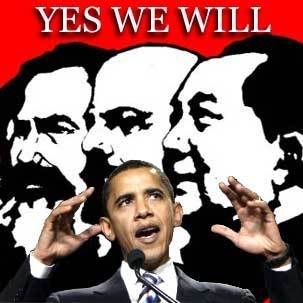

Marxist writing (hyena, hangman, cannibal, petty bourgeois, these gentry, lackey, flunkey, mad dog, White Guard, etc.) consists largely of words translated from Russian, German, or French; but the normal way of coining a new word is to use Latin or Greek root with the appropriate affix and, where necessary, the size formation. It is often easier to make up words of this kind (deregionalize, impermissible, extramarital, non-fragmentary and so forth) than to think up the English words that will cover one's meaning. The result, in general, is an increase in slovenliness and vagueness.

Meaningless words. In certain kinds of writing, particularly in art criticism and literary criticism, it is normal to come across long passages which are almost completely lacking in meaning.† Words like romantic, plastic, values, human, dead, sentimental, natural, vitality, as used in art criticism, are strictly meaningless, in


† Example: Comfort's catholicity of perception and image, strangely Whitmanesque in range, almost the exact opposite in aesthetic compulsion, continues to evoke that trembling atmospheric accumulative hinting at a cruel, an inexorably serene timelessness . . .Wrey Gardiner scores by aiming at simple bull's-eyes with precision. Only they are not so simple, and through this contented sadness runs more than the surface bittersweet of resignation." (Poetry Quarterly)

the sense that they not only do not point to any discoverable object, but are hardly ever expected to do so by the reader. When one critic writes, "The outstanding feature of Mr. X's work is its living quality," while another writes, "The immediately striking thing about Mr. X's work is its peculiar deadness," the reader accepts this as a simple difference opinion. If words like black and white were involved, instead of the jargon words dead and living, he would see at once that language was being used in an improper way.

Many political words are similarly abused. The word Fascism has now no meaning except in so far as it signifies "something not desirable." The words democracy, socialism, freedom, patriotic, realistic, justice have each of them several different meanings which cannot be reconciled with one another. In the case of a word like democracy, not only is there no agreed definition, but the attempt to make one is resisted from all sides.

It is almost universally felt that when we call a country democratic we are praising it: consequently the defenders of every kind of regime claim that it is a democracy, and fear that they might have to stop using that word if it were tied down to any one meaning. Words of this kind are often used in a consciously dishonest way. That is, the person who uses them has his own private definition, but allows his hearer to think he means something quite different. Statements like Marshal Pétain was a true patriot, The Soviet press is the freest in the world, The Catholic Church is opposed to persecution, are almost always made with intent to deceive. Other words used in variable meanings, in most cases more or less dishonestly, are: class, totalitarian, science, progressive, reactionary, bourgeois, equality.
Now that I have made this catalogue of swindles and perversions, let me give another example of the kind of writing that they lead to. This time it must of its nature be an imaginary one. I am going to translate a passage of good English into modern English of the worst sort. Here is a well-known verse from Ecclesiastes:

I returned and saw under the sun, that the race is not to the swift, nor the battle to the strong, neither yet bread to the wise, nor yet riches to men of understanding, nor yet favour to men of skill; but time and chance happeneth to them all.

Here it is in modern English:

Objective considerations of contemporary phenomena compel the conclusion that success or failure in competitive activities exhibits no tendency to be commensurate with innate capacity, but that a considerable element of the unpredictable must invariably be taken into account.

This is a parody, but not a very gross one. Exhibit (3) above, for instance, contains several patches of the same kind of English. It will be seen that I have not made a full translation. The beginning and ending of the sentence follow the original meaning fairly closely, but in the middle the concrete illustrations -- race, battle, bread -- dissolve into the vague phrases "success or failure in competitive activities."

This had to be so, because no modern writer of the kind I am discussing -- no one capable of using phrases like "objective considerations of contemporary phenomena" -- would ever tabulate his thoughts in that precise and detailed way. The whole tendency of modern prose is away from concreteness. Now analyze these two sentences a little more closely. The first contains forty-nine words but only sixty syllables, and all its words are those of everyday life. The second contains thirty-eight words of ninety syllables: eighteen of those words are from Latin roots, and one from Greek.

The first sentence contains six vivid images, and only one phrase ("time and chance") that could be called vague. The second contains not a single fresh, arresting phrase, and in spite of its ninety syllables it gives only a shortened version of the meaning contained in the first. Yet without a doubt it is the second kind of sentence that is gaining ground in modern English. I do not want to exaggerate. This kind of writing is not yet universal, and outcrops of simplicity will occur here and there in the worst-written page. Still, if you or I were told to write a few lines on the uncertainty of human fortunes, we should probably come much nearer to my imaginary sentence than to the one from Ecclesiastes.

As I have tried to show, modern writing at its worst does not consist in picking out words for the sake of their meaning and inventing images in order to make the meaning clearer. It consists in gumming together long strips of words which have already been set in order by someone else, and making the results presentable by sheer humbug. The attraction of this way of writing is that it is easy. It is easier -- even quicker, once you have the habit -- to say In my opinion it is not an unjustifiable assumption that than to say I think. If you use ready-made phrases, you not only don't have to hunt about for the words; you also don't have to bother with the rhythms of your sentences since these phrases are generally so arranged as to be more or less euphonious. When you are composing in a hurry -- when you are dictating to a stenographer, for instance, or making a public speech -- it is natural to fall into a pretentious, Latinized style.
Tags like a consideration which we should do well to bear in mind or a conclusion to which all of us would readily assent will save many a sentence from coming down with a bump. By using stale metaphors, similes, and idioms, you save much mental effort, at the cost of leaving your meaning vague, not only for your reader but for yourself. This is the significance of mixed metaphors. The sole aim of a metaphor is to call up a visual image. When these images clash -- as in The Fascist octopus has sung its swan song, the jackboot is thrown into the melting pot -- it can be taken as certain that the writer is not seeing a mental image of the objects he is naming; in other words he is not really thinking. Look again at the examples I gave at the beginning of this essay.

Professor Laski (1) uses five negatives in fifty three words. One of these is superfluous, making nonsense of the whole passage, and in addition there is the slip -- alien for akin -- making further nonsense, and several avoidable pieces of clumsiness which increase the general vagueness. Professor Hogben (2) plays ducks and drakes with a battery which is able to write prescriptions, and, while disapproving of the everyday phrase put up with, is unwilling to look egregious up in the dictionary and see what it means; (3), if one takes an uncharitable attitude towards it, is simply meaningless: probably one could work out its intended meaning by reading the whole of the article in which it occurs. In (4), the writer knows more or less what he wants to say, but an accumulation of stale phrases chokes him like tea leaves blocking a sink. In (5), words and meaning have almost parted company.

People who write in this manner usually have a general emotional meaning -- they dislike one thing and want to express solidarity with another -- but they are not interested in the detail of what they are saying. A scrupulous writer, in every sentence that he writes, will ask himself at least four questions, thus:

1. What am I trying to say?

2. What words will express it?

3. What image or idiom will make it clearer?

4. Is this image fresh enough to have an effect?

And he will probably ask himself two more:

1. Could I put it more shortly?

2. Have I said anything that is avoidably ugly?

But you are not obliged to go to all this trouble. You can shirk it by simply throwing your mind open and letting the ready-made phrases come crowding in. They will construct your sentences for you -- even think your thoughts for you, to a certain extent -- and at need they will perform the important service of partially concealing your meaning even from yourself. It is at this point that the special connection between politics and the debasement of language becomes clear.

In our time it is broadly true that political writing is bad writing. Where it is not true, it will generally be found that the writer is some kind of rebel, expressing his private opinions and not a "party line." Orthodoxy, of whatever color, seems to demand a lifeless, imitative style. The political dialects to be found in pamphlets, leading articles, manifestoes, White papers and the speeches of undersecretaries do, of course, vary from party to party, but they are all alike in that one almost never finds in them a fresh, vivid, homemade turn of speech. When one watches some tired hack on the platform mechanically repeating the familiar phrases -- bestial atrocities, iron heel, bloodstained tyranny, free peoples of the world, stand shoulder to shoulder -- one often has a curious feeling that one is not watching a live human being but some kind of dummy: a feeling which suddenly becomes stronger at moments when the light catches the speaker's spectacles and turns them into blank discs which seem to have no eyes behind them.

And this is not altogether fanciful. A speaker who uses that kind of phraseology has gone some distance toward turning himself into a machine. The appropriate noises are coming out of his larynx, but his brain is not involved as it would be if he were choosing his words for himself. If the speech he is making is one that he is accustomed to make over and over again, he may be almost unconscious of what he is saying, as one is when one utters the responses in church. And this reduced state of consciousness, if not indispensable, is at any rate favorable to political conformity.

In our time, political speech and writing are largely the defense of the indefensible. Things like the continuance of British rule in India, the Russian purges and deportations, the dropping of the atom bombs on Japan, can indeed be defended, but only by arguments which are too brutal for most people to face, and which do not square with the professed aims of the political parties. Thus political language has to consist largely of euphemism., question-begging and sheer cloudy vagueness.

Defenseless villages are bombarded from the air, the inhabitants driven out into the countryside, the cattle machine-gunned, the huts set on fire with incendiary bullets: this is called pacification. Millions of peasants are robbed of their farms and sent trudging along the roads with no more than they can carry: this is called transfer of population or rectification of frontiers. People are imprisoned for years without trial, or shot in the back of the neck or sent to die of scurvy in Arctic lumber camps: this is called elimination of unreliable elements. Such phraseology is needed if one wants to name things without calling up mental pictures of them. Consider for instance some comfortable English professor defending Russian totalitarianism. He cannot say outright, "I believe in killing off your opponents when you can get good results by doing so." Probably, therefore, he will say something like this:

"While freely conceding that the Soviet regime exhibits certain features which the humanitarian may be inclined to deplore, we must, I think, agree that a certain curtailment of the right to political opposition is an unavoidable concomitant of transitional periods, and that the rigors which the Russian people have been called upon to undergo have been amply justified in the sphere of concrete achievement."

The inflated style itself is a kind of euphemism. A mass of Latin words falls upon the facts like soft snow, blurring the outline and covering up all the details. The great enemy of clear language is insincerity. When there is a gap between one's real and one's declared aims, one turns as it were instinctively to long words and exhausted idioms, like a cuttlefish spurting out ink. In our age there is no such thing as "keeping out of politics." All issues are political issues, and politics itself is a mass of lies, evasions, folly, hatred, and schizophrenia. When the general atmosphere is bad, language must suffer. I should expect to find -- this is a guess which I have not sufficient knowledge to verify -- that the German, Russian and Italian languages have all deteriorated in the last ten or fifteen years, as a result of dictatorship.

But if thought corrupts language, language can also corrupt thought. A bad usage can spread by tradition and imitation even among people who should and do know better. The debased language that I have been discussing is in some ways very convenient. Phrases like a not unjustifiable assumption, leaves much to be desired, would serve no good purpose, a consideration which we should do well to bear in mind, are a continuous temptation, a packet of aspirins always at one's elbow. Look back through this essay, and for certain you will find that I have again and again committed the very faults I am protesting against. By this morning's post I have received a pamphlet dealing with conditions in Germany. The author tells me that he "felt impelled" to write it.

I open it at random, and here is almost the first sentence I see: "[The Allies] have an opportunity not only of achieving a radical transformation of Germany's social and political structure in such a way as to avoid a nationalistic reaction in Germany itself, but at the same time of laying the foundations of a co-operative and unified Europe." You see, he "feels impelled" to write -- feels, presumably, that he has something new to say -- and yet his words, like cavalry horses answering the bugle, group themselves automatically into the familiar dreary pattern. This invasion of one's mind by ready-made phrases (lay the foundations, achieve a radical transformation) can only be prevented if one is constantly on guard against them, and every such phrase anaesthetizes a portion of one's brain.

I said earlier that the decadence of our language is probably curable. Those who deny this would argue, if they produced an argument at all, that language merely reflects existing social conditions, and that we cannot influence its development by any direct tinkering with words and constructions. So far as the general tone or spirit of a language goes, this may be true, but it is not true in detail.

Silly words and expressions have often disappeared, not through any evolutionary process but owing to the conscious action of a minority. Two recent examples were explore every avenue and leave no stone unturned, which were killed by the jeers of a few journalists. There is a long list of flyblown metaphors which could similarly be got rid of if enough people would interest themselves in the job; and it should also be possible to laugh the not un- formation out of existence*, to reduce the amount of Latin and Greek in the average sentence, to drive out foreign phrases


*One can cure oneself of the not un- formation by memorizing this sentence: A not unblack dog was chasing a not unsmall rabbit across a not ungreen field.


and strayed scientific words, and, in general, to make pretentiousness unfashionable. But all these are minor points. The defense of the English language implies more than this, and perhaps it is best to start by saying what it does not imply.

To begin with it has nothing to do with archaism, with the salvaging of obsolete words and turns of speech, or with the setting up of a "standard English" which must never be departed from. On the contrary, it is especially concerned with the scrapping of every word or idiom which has outworn its usefulness. It has nothing to do with correct grammar and syntax, which are of no importance so long as one makes one's meaning clear, or with the avoidance of Americanisms, or with having what is called a "good prose style." On the other hand, it is not concerned with fake simplicity and the attempt to make written English colloquial. Nor does it even imply in every case preferring the Saxon word to the Latin one, though it does imply using the fewest and shortest words that will cover one's meaning.

What is above all needed is to let the meaning choose the word, and not the other way around. In prose, the worst thing one can do with words is surrender to them. When you think of a concrete object, you think wordlessly, and then, if you want to describe the thing you have been visualizing you probably hunt about until you find the exact words that seem to fit it. When you think of something abstract you are more inclined to use words from the start, and unless you make a conscious effort to prevent it, the existing dialect will come rushing in and do the job for you, at the expense of blurring or even changing your meaning. Probably it is better to put off using words as long as possible and get one's meaning as clear as one can through pictures and sensations.

Afterward one can choose -- not simply accept -- the phrases that will best cover the meaning, and then switch round and decide what impressions one's words are likely to make on another person. This last effort of the mind cuts out all stale or mixed images, all prefabricated phrases, needless repetitions, and humbug and vagueness generally. But one can often be in doubt about the effect of a word or a phrase, and one needs rules that one can rely on when instinct fails. I think the following rules will cover most cases:

(i) Never use a metaphor, simile, or other figure of speech which you are used to seeing in print.

(ii) Never us a long word where a short one will do.

(iii) If it is possible to cut a word out, always cut it out.

(iv) Never use the passive where you can use the active.

(v) Never use a foreign phrase, a scientific word, or a jargon word if you can think of an everyday English equivalent.

(vi) Break any of these rules sooner than say anything outright barbarous.

These rules sound elementary, and so they are, but they demand a deep change of attitude in anyone who has grown used to writing in the style now fashionable. One could keep all of them and still write bad English, but one could not write the kind of stuff that I quoted in those five specimens at the beginning of this article.

I have not here been considering the literary use of language, but merely language as an instrument for expressing and not for concealing or preventing thought. Stuart Chase and others have come near to claiming that all abstract words are meaningless, and have used this as a pretext for advocating a kind of political quietism. Since you don't know what Fascism is, how can you struggle against Fascism? One need not swallow such absurdities as this, but one ought to recognize that the present political chaos is connected with the decay of language, and that one can probably bring about some improvement by starting at the verbal end. If you simplify your English, you are freed from the worst follies of orthodoxy.

You cannot speak any of the necessary dialects, and when you make a stupid remark its stupidity will be obvious, even to yourself. Political language -- and with variations this is true of all political parties, from Conservatives to Anarchists -- is designed to make lies sound truthful and murder respectable, and to give an appearance of solidity to pure wind. One cannot change this all in a moment, but one can at least change one's own habits, and from time to time one can even, if one jeers loudly enough, send some worn-out and useless phrase -- some jackboot, Achilles' heel, hotbed, melting pot, acid test, veritable inferno, or other lump of verbal refuse -- into the dustbin, where it belongs.
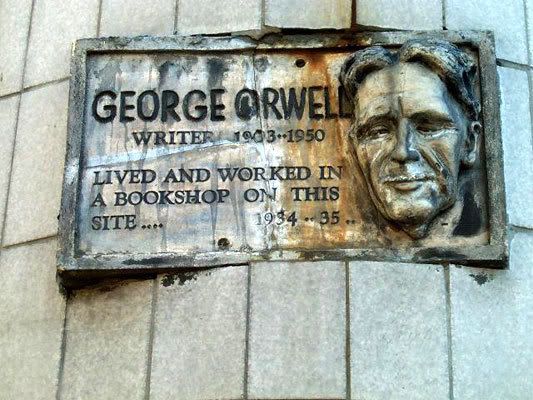
~ GEORGE ORWELL 1946

WFRL: Avenging Angels

WFRL dedicates this spin to the Archangel Michael

'Archangel Michael' painted by Daniel Mirante


Space ~ Avenging Angels

Calling all avenging angels

Vengeance, you know it tastes so good
Vengeance is as cold as ice
When it has you in its sights

Calling all avenging angels (Angels, kick ass angels)

You could give a call to Scotland Yard,
Or send for help from the FBI.
But they won't stop a bomb going off
With only seconds on the clock

Calling all avenging angels (Angels, kick ass angels)

Angel, oh angel,
Here to brighten up my darkest day.
Take me in your arms,
Protect me from my enemies. (Enemies)
Oh deadly angel, oh angel,
And when they've got me on my knees -
When they're just about to do the deadly deed
You rescue me, you rescue me, you rescue me!

Calling all avenging angels (Angels, kick ass angels)

Missing Links: Bordering on Disaster


ELTON JOHN ~ BORDER SONG

Holy Moses....I have been deceived!
Listen, King Jehoshaphat and all who live in Judah and Jerusalem! This is what the Lord says to you: 'Do not be afraid or discouraged because of this vast army. For the battle is not yours, but God's. Tomorrow march down against them. They will be climbing up by the Pass of Ziz, and you will find them at the end of the gorge in the Desert of Jeruel. You will not have to fight this battle. Take up your positions; stand firm and see the deliverance the Lord will give you, O Judah and Jerusalem. Do not be afraid; do not be discouraged. Go out to face them tomorrow, and the Lord will be with you.
~ II Chronicles 20:15-17

Hezbollah downs Lebanese chopper, thought it was Israeli

Egypt to partially open its border with Gaza this weekend


Israel reaches decision not to let Iran go nuclear

Israel arrests Fatah man who was pardoned but 'returned to terror'

but...but.... Fatah are our friends! Abbas is a man of peace!

5 women buried alive "for honor"

ACLU sues over Santa Rosa County school prayers
The goals of the ACLU were clear from the group’s founding, as indicated by the writings of its founder, Roger Baldwin: “I am for socialism, disarmament, and ultimately for abolishing the state itself as an instrument of violence and compulsion. I seek social ownership of property, the abolition of the propertied class… Communism is the goal"
Putin maps the boundaries of greater Russia

BWAK! US chicken industry awaiting details of Russia ban

Good. More bird for me.

A sick society wallowing in its own vomit


Molly Hatchet
Flirtin' With Disaster


Red Ken Livingstone to become adviser to Hugo Chavez

VIVA ITALIA! Italy Proposes Bill to end all Mosque Construction

Egypt: Police prevent Copts from repairing their church

SIOE is holding a "No sharia here!" demo in London on 9/11

Hamas leader: We'll retrieve Jerusalem only by way of jihad
Hamas leader Ismail Haniyeh said Wednesday that the Islamist group will not accept any future peace agreement that does not include the return of Jerusalem and the Jordan Valley to Palestinians hands and the return of Palestinian refugees to their homes in Israel.

Speaking at a ceremony marking 39 years since the fire at the Al-Aqsa Mosque in Jerusalem's Old City, Haniyeh said "no one can cede Jerusalem, the city from which the Prophet Muhammad ascended to the heavens.

"Jerusalem will be retrieved to the Palestinians not through negotiations or by hugging and kissing the enemy, but by way of jihad, blood, shahids and resistance. With Allah's help, Jerusalem will be returned," he said.
Lucas Catherine conference at Brussels Catholic school: Israel is an apartheid state

Democrat's Biden On his pro-abortion stance: "My Views are Totally Consistent with Catholic Social Doctrine..."

Douglas Kmiec Makes His ‘Catholic Case’ for Obama

Abortion protesters drowned out at women's caucus

Israel-Syria "deal"'?

Israel's suicidal choice

Assad working "post-Georgia" world to his advantage


Brad Sucks ~ Borderline

Thursday, August 28, 2008

3 Wood: Sweden Gets it's Sharia On


BLUE SWEDE
Hooked on a Feeling


Sharia banking continues to spread.

Wednesday sees the start of Sweden’s first Shariah Islamic investment fund. The fund follows Islamic criteria and includes 110 international companies who may not deal with weapons, finance, pornography or alcohol. Other Swedish banks are planning services for Moslem customers.

Claes Hemberg of Avanza Bank says that their customers have been asking for a Sharia fund for a long time. The Dow Jones Islamic market index was started ten years ago and it was only a matter of time until Sharia funds came to Sweden.

As I've mentioned in the past, the only real hard part of converting a traditional investment instrument into a sharia compliant vehicle, is to convert any interest payment streams into a fixed fee and it works. From there it's a matter of picking what will and won't be included as underlying securities or what types of businesses will be loaned money and which ones won't. In that way, it could become a legal way to discriminate against other people, religions, etc.
~ 3 WOOD

Republicans Reaping the Whirlwind


Shir Lama'alot - Psalm 121

Selling Israel to Moloch and attempting to split Jerusalem does not go unnoticed.
He who watches over Israel neither slumbers nor sleeps

The boy's name Gustave \g(u)-sta-ve, gus-tave\
is pronounced GOO-stahv.
It is of Scandinavian origin,
and its meaning is
"royal staff; staff of the gods"
Hurricanes and Political Conventions Don’t Mix
Thursday, August 28, 2008
By Susan Jones, Senior Editor


(CNSNews.com) - The White House and the Republican National Committee are discussing the possibility of schedule changes at the upcoming Republican National Convention, if Hurricane Gustav slams ashore in the New Orleans area, as forecasters say it might do.

President George W. Bush and Vice President Dick Cheney are currently scheduled to address the convention in St. Paul on Monday night. The hurricane (now a tropical storm) could make landfall somewhere along the Gulf Coast on Monday or Tuesday.

Fox News reported Thursday morning that conversations are under way about the convention schedule behind closed doors. The question is whether Bush and Cheney will speak on Monday, if the hurricane comes ashore around then.

White House spokesman Dana Perino told reporters on Thursday it’s too early to tell how the hurricane might affect the convention schedule.

Louisiana Gov. Bobby Jindal, a rising star in the Republican Party, may not be able to attend the convention. He already has declared a state of emergency in Louisiana. According to the Associated Press, officials may evacuate New Orleans as Gustav nears.

FEMA Director David Paulison is already in Louisiana, reports said, and Homeland Security Director Michael Chertoff is heading to the area as well.

With memories of Hurricane Katrina -- and criticism of the local, state and federal response -- still fresh three years later, it’s presumed that Republicans would be unwilling to party in Minnesota when another hurricane roars ashore.

The third anniversary of Katrina is tomorrow (Aug. 29).

Tropical Storm Gustav is now in the Caribbean. The National Hurricane Center said Gustav could become a "powerful hurricane" as it moves into the southern Gulf of Mexico on Sunday. The current path shows it landing anywhere from the Florida Panhandle to the Gulf Coast of Texas.

And tropical storm Hanna is following on Gustav’s heels, although it’s too soon to say where it might go.

The girl's name Hannah \ha(n)-nah\ is pronounced HAN-ah. It is of Hebrew origin, and its meaning is "favored grace". Biblical: mother of the prophet Samuel. Being barren, she asked God to bless her with a child, and her prayer was answered. Hence, the name literally means "God has graced me with a son"


  1. Isaiah 40:24
    No sooner are they planted, no sooner are they sown, no sooner do they take root in the ground, than he blows on them and they wither, and a whirlwind sweeps them away like chaff.
    Isaiah 40:23-25 (in Context) Isaiah 40 (Whole Chapter)
  2. Isaiah 66:15
    See, the LORD is coming with fire, and his chariots are like a whirlwind; he will bring down his anger with fury, and his rebuke with flames of fire.
    Isaiah 66:14-16 (in Context) Isaiah 66 (Whole Chapter)
  3. Jeremiah 4:13
    Look! He advances like the clouds, his chariots come like a whirlwind, his horses are swifter than eagles. Woe to us! We are ruined!
    Jeremiah 4:12-14 (in Context) Jeremiah 4 (Whole Chapter)
  4. Jeremiah 23:19
    See, the storm of the LORD will burst out in wrath, a whirlwind swirling down on the heads of the wicked.
    Jeremiah 23:18-20 (in Context) Jeremiah 23 (Whole Chapter)
  5. Hosea 4:19
    A whirlwind will sweep them away, and their sacrifices will bring them shame.
    Hosea 4:18-19 (in Context) Hosea 4 (Whole Chapter)
  6. Hosea 8:1
    [ Israel to Reap the Whirlwind ] "Put the trumpet to your lips! An eagle is over the house of the LORD because the people have broken my covenant and rebelled against my law.
    Hosea 8:1-3 (in Context) Hosea 8 (Whole Chapter)
  7. Hosea 8:7
    "They sow the wind and reap the whirlwind. The stalk has no head; it will produce no flour. Were it to yield grain, foreigners would swallow it up.
    Hosea 8:6-8 (in Context) Hosea 8 (Whole Chapter)
  8. Nahum 1:3
    The LORD is slow to anger and great in power; the LORD will not leave the guilty unpunished. His way is in the whirlwind and the storm, and clouds are the dust of his feet.
    Nahum 1:2-4 (in Context) Nahum 1 (Whole Chapter)
  9. Zechariah 7:14
    'I scattered them with a whirlwind among all the nations, where they were strangers. The land was left so desolate behind them that no one could come or go. This is how they made the pleasant land desolate.' "
    Zechariah 7:13-14 (in Context) Zechariah 7 (Whole Chapter)
SEE ALSO:

ZOA on Bush Nixing Refueling Aircraft for Israel

He (ABBAS) added that if there will be no final peace deal by the end of the year, we will keep working with the new U.S. Administration in order to finalize a peace deal that leads to establishing a Palestinian state with Jerusalem as its capital

Rice calls on Israel to stop building in West Bank .....

AGAIN

US & Israel Sign Murder-Suicide Pact

Rice Visit: PA State Closer than Ever

Rice Wants More Israeli Goodwill Terrorist Releases

Queen Condi of the Amalekites: Slouching Toward Armageddon

Blue in Green


MILES DAVIS ~ BLUE IN GREEN

Missing Links in theTemple of the Demodog


Temple of the Dog ~ Say Hello to Heaven

Said one Democrat: "This is a disaster of mythical proportions." Said another: "It's not enough that he wants to be president -- he wants to be Zeus." Said the first: "Will he send down thunderbolts from the mountain?"

Those are the Democrats -- though assuredly not Obama partisans.

Microsoft Internet Explorer 8 to Include 'Porn Mode'

24. Eliminate all laws governing obscenity by calling them "censorship" and a violation of free speech and free press.

25. Break down cultural standards of morality by promoting pornography and obscenity in books, magazines, motion pictures, radio, and TV.

26. Present homosexuality, degeneracy and promiscuity as "normal, natural, healthy."


Iggy Pop ~ Your Dog

Thursday Morning Prelude to Disaster


Bach's Cello Suite No. 6
Rostropovich plays the Prélude

Wednesday, August 27, 2008

Wednesday Night Historical Cinema


Triumph of the Will ~ Leni Riefenstahl
Nazi Propaganda Deluxe ~ 1934

ACHTUNG!
CLICKEN ZISS NOW, JUDENCHRISTOSVINEHUNDT!


SOURCE

Most religious movements and political dynasties throughout history have had one city that could be called the focal point, or heart, of the movement - Rome, Jerusalem, Constantinople and so forth. For the Nazis, the heart of their movement was the magnificent medieval city of Nuremberg, symbolizing the link between Germany's Gothic past and its Nazi future.

Each September, a pilgrimage was held in which followers gathered from all over the Reich to participate in torchlight marches and solemn ceremonies honoring fallen Nazis. There were also big military-style parades, and most important of all, a chance to see the Führer in person.

In September 1934, American journalist William L. Shirer had just arrived in Germany to work as a reporter for the Hearst company. He proceeded to keep a diary of the entire seven years he spent reporting from inside Hitler's Reich.

Shirer thought it would be a good idea to attend the 1934 Nuremberg Rally to better understand the Nazi phenomenon. On his very first evening in the old city, he found himself accidentally stuck among a throng of ten thousand people in front of Hitler's hotel, shouting: "We want our Führer!"

"I was a little shocked at the faces," Shirer wrote in his diary, "when Hitler finally appeared on the balcony for a moment. They reminded me of the crazed expressions I once saw in the back country of German women greet Hitler after his arrival in Nuremberg.Louisiana on the faces of some Holy Rollers...they looked up at him as if he were a Messiah, their faces transformed into something positively inhuman."

The next morning, Shirer was among the attendees at the Rally's opening ceremony, held inside a large hall on the outskirts of Nuremberg. It was Shirer's first experience with Nazi pomp and pageantry.

"I am beginning to comprehend," he wrote, "some of the reasons for Hitler's astounding success. Borrowing a chapter from the Roman [Catholic] church, he is restoring pageantry and color and mysticism to the drab lives of 20th Century Germans. This morning's opening meeting...was more than a gorgeous show, it also had something of the mysticism and religious fervor of an Easter or Christmas Mass in a great Gothic cathedral. The hall was a sea of brightly colored flags. Even Hitler's arrival was made dramatic. The band stopped playing. There was a hush over the thirty thousand people packed in the hall. Then the band struck up the Badenweiler March...Hitler appeared in the back of the auditorium and followed by his aides, Göring, Goebbels, Hess, Himmler and the others, he slowly strode down the long center aisle while thirty thousand hands were raised in salute."

To Shirer, the intoxicating atmosphere inside the hall was such that "every word dropped by Hitler seemed like an inspired word from on high. Man's - or at least the German's - critical faculty is swept away at such moments, and every lie pronounced is accepted as high truth itself."

It was during this opening meeting that Hitler's victorious proclamation was read: "The German form of life is definitely determined for the next thousand years."

At Hitler's personal request, a 31-year-old actress and movie director named Leni Riefenstahl was filming the entire week-long Rally. Utilizing thirty film cameras and 120 technicians, she produced an extraordinary film record of the festivities, featuring many unique camera angles and dramatic lighting effects.

160,000 Germans watch in silence as Hitler, Himmler, and Lutze walk down a memorial path.Riefenstahl's finished masterpiece, Triumph of the Will, contains many impressive scenes, but perhaps none more powerful than the scene in which Hitler, Himmler, and the new SA leader, Viktor Lutze, walk down a wide aisle in the center of Nuremberg stadium flanked on either side by gigantic formations of Nazis in perfectly aligned columns.

In previous years, the three men walking that path would have been Hitler, Himmler and Röhm. But the troublesome Röhm was now dead, replaced by the dutiful and lackluster Lutze. Back in February, it had been Lutze who told Hitler about Röhm's comments concerning "that ridiculous corporal." For his steadfast loyalty, Lutze was given command of the SA with strict orders from Hitler to keep the Brownshirts firmly in line.

On Sunday, September 9, during the Rally, Hitler faced a mass gathering of his SA Brownshirts for the first time since the Night of the Long Knives. In scenes well-documented by Riefenstahl's cameras, about 50,000 Brownshirts stood in neat formations and listened to a slightly edgy Hitler attempt to patch things up. Interestingly, the film also shows a huge cordon of SS guards in attendance.

"Men of the SA and SS," Hitler bellowed from the podium, "a few months ago a black shadow spread over the movement. Neither the SA, nor any other institution of the Party, has anything to do with this shadow. They are all deceived who believe that even one crack has occurred in the structure of our united movement...Only a lunatic or deliberate liar could think that I, or anybody, would ever intend to dissolve what we ourselves have built up over many long years...In the past you have proved your loyalty to me a thousandfold, and it cannot and will not be different in the future."

A typical camera angle used by Riefenstahl in her film makes Hitler appear larger than life.Thus Hitler absolved the SA membership from any complicity in the events precipitating the blood purge. And amid a hearty chorus of 'Sieg Heils,' the Brownshirts sounded their approval. Any concerns over possible trouble from the SA during the Rally had been unfounded.

Riefenstahl's film next shows a lengthy sequence featuring the grand finale parade, and concludes with Hitler's speech at the closing ceremony in which he labels the Rally "a most impressive display of political power." Hitler goes on to declare the Nazi Party "will be unchangeable in its doctrine, hard as steel in its organization, supple and adaptable in its tactics. In its entity, however, it will be like a religious order..."

For many Germans, a trip to the Nuremberg Rally was indeed a religious-like experience and they returned home with renewed dedication to the Nazi cause and increased devotion to their Führer.

Upon the very first screening of Triumph of the Will in 1936 the Nazis knew they had struck propaganda gold. The film played to packed movie theaters throughout Germany. For her efforts, Riefenstahl received a Cultural Achievement award from Goebbels' Propaganda Ministry. The film also won a gold medal for its artistry at the 1937 World Exhibition in Paris.

The legacy of Triumph of the Will lives on today in the numerous TV documentaries concerning the Nazi era which replay portions of the film in regard to Hitler's early days, or show snippets of euphoric Hitler Youth, or the SS goose-stepping smartly on parade.

The film's most enduring and dangerous illusion is that Nazi Germany was a super-organized state, that, although evil in nature, was impressive nonetheless.

In reality, Nazi Germany was only well organized to the degree that it was a murderous police state. The actual Reich government was a tangled mess of inefficient agencies and overlapping bureaucracies led by ruthless men who had little, if any, professional administrative abilities. From the Reich's first hours in January 1933 until the end in May 1945, various departmental leaders battled each other for power, and would do anything to curry favor with a superior Nazi authority and especially with Hitler, the ultimate authority. Hence, they would all become enthusiastic cogs in the Führer's war and extermination machines.

In 1934, over a million Germans had participated in the hugely successful Nuremberg Rally. And from this point onward, the rallies got even bigger. The following year, 1935, is remembered for the special announcements concerning the status of Jews in Germany. These new rules became known as the Nuremberg Laws and for the Jews of Europe would one day be a matter of life and death.

The Mercy Seat is Waiting....


8/26/08:
Rice: Settlements Are Not Helpful to Peace

[SNIP]
He (ABBAS) added that if there will be no final peace deal by the end of the year, we will keep working with the new U.S. Administration in order to finalize a peace deal that leads to establishing a Palestinian state with Jerusalem as its capital

Jordan reaches out to Hamas
"We're at a crossroads and Jordan must protect itself and its national interests," said former Jordanian parliament speaker Abdul-Latif Arabiyat.


Johnny Cash
Nick Cave's "Mercy Seat"

It is time for Teshuvah like it has never been time for Teshuvah before
Time to get righteous before HE flicks yer lightswitch

And the Mercy Seat is waiting
And I think my head is burning
And in a way I'm yearning
To be done with all this weighing of the truth
An eye for an eye
A tooth for a tooth
And anyway I told the truth
And I'm not afraid to die
Avinu Malkenu, " Our Father, Our King " is among the most moving and well-known prayers of the Jewish High Holidays. Sung several times throughout Yom Kippur, this plea for compassion from a merciful God toward an undeserving people sums up the theme of the Day of Atonement, while its haunting melody sets the tone for this solemn day.


Lyrics translated:

Our Father, our King,
Be gracious unto us and answer us
For we are unworthy.
Deal with us in charity and loving-kindness
And save us.

Lyrics tranlisterated:

Avinu malkeinu
khaneinu va'aneynu
sh'ayn banu ma'asim
Ase imanu tzedakah
va'khesed v'hoshe'eynu

Yom Kippur 2008 falls on Thursday, the
9th of October
...In the seventh month, on the tenth day of the month, you shall afflict your souls, and you shall not do any work ... For on that day he shall provide atonement for you to cleanse you from all your sins before the L-RD.
~Leviticus 16:29-30

Yom Kippur is probably the most important holiday of the Jewish year. Many Jews who do not observe any other Jewish custom will refrain from work, fast and/or attend synagogue services on this day. Yom Kippur occurs on the 10th day of Tishri. The holiday is instituted at Leviticus 23:26 et seq.

The name "Yom Kippur" means "Day of Atonement," and that pretty much explains what the holiday is. It is a day set aside to "afflict the soul," to atone for the sins of the past year. In Days of Awe, I mentioned the "books" in which G-d inscribes all of our names. On Yom Kippur, the judgment entered in these books is sealed. This day is, essentially, your last appeal, your last chance to change the judgment, to demonstrate your repentance and make amends.

As I noted in Days of Awe, Yom Kippur atones only for sins between man and G-d, not for sins against another person. To atone for sins against another person, you must first seek reconciliation with that person, righting the wrongs you committed against them if possible. That must all be done before Yom Kippur.

Yom Kippur is a complete Sabbath; no work can be performed on that day. It is well-known that you are supposed to refrain from eating and drinking (even water) on Yom Kippur. It is a complete, 25-hour fast beginning before sunset on the evening before Yom Kippur and ending after nightfall on the day of Yom Kippur. The Talmud also specifies additional restrictions that are less well-known: washing and bathing, anointing one's body (with cosmetics, deodorants, etc.), wearing leather shoes (Orthodox Jews routinely wear canvas sneakers under their dress clothes on Yom Kippur), and engaging in sexual relations are all prohibited on Yom Kippur.

As always, any of these restrictions can be lifted where a threat to life or health is involved. In fact, children under the age of nine and women in childbirth (from the time labor begins until three days after birth) are not permitted to fast, even if they want to. Older children and women from the third to the seventh day after childbirth are permitted to fast, but are permitted to break the fast if they feel the need to do so. People with other illnesses should consult a physician and a rabbi for advice.

Most of the holiday is spent in the synagogue, in prayer. In Orthodox synagogues, services begin early in the morning (8 or 9 AM) and continue until about 3 PM. People then usually go home for an afternoon nap and return around 5 or 6 PM for the afternoon and evening services, which continue until nightfall. The services end at nightfall, with the blowing of the tekiah gedolah, a long blast on the shofar. See Rosh Hashanah for more about the shofar and its characteristic blasts.

It is customary to wear white on the holiday, which symbolizes purity and calls to mind the promise that our sins shall be made as white as snow (Is. 1:18). Some people wear a kittel, the white robe in which the dead are buried.

Yom Kippur Liturgy

See also Jewish Liturgy generally.

The liturgy for Yom Kippur is much more extensive than for any other day of the year. Liturgical changes are so far-reaching that a separate, special prayer book for Yom Kippur and Rosh Hashanah. This prayer book is called the machzor.

The evening service that begins Yom Kippur is commonly known as Kol Nidre, named for the prayer that begins the service. "Kol nidre" means "all vows," and in this prayer, we ask G-d to annul all personal vows we may make in the next year. It refers only to vows between the person making them and G-d, such as "If I pass this test, I'll pray every day for the next 6 months!" Click the musical notes to hear a portion of the traditional tune for this prayer.

This prayer has often been held up by anti-Semites as proof that Jews are untrustworthy (we do not keep our vows), and for this reason the Reform movement removed it from the liturgy for a while. In fact, the reverse is true: we make this prayer because we take vows so seriously that we consider ourselves bound even if we make the vows under duress or in times of stress when we are not thinking straight. This prayer gave comfort to those who were converted to Christianity by torture in various inquisitions, yet felt unable to break their vow to follow Christianity. In recognition of this history, the Reform movement restored this prayer to its liturgy.

There are many additions to the regular liturgy (there would have to be, to get such a long service ). Perhaps the most important addition is the confession of the sins of the community, which is inserted into the Shemoneh Esrei (Amidah) prayer. Note that all sins are confessed in the plural (we have done this, we have done that), emphasizing communal responsibility for sins.

There are two basic parts of this confession: Ashamnu, a shorter, more general list (we have been treasonable, we have been aggressive, we have been slanderous...), and Al Cheit, a longer and more specific list (for the sin we sinned before you forcibly or willingly, and for the sin we sinned before you by acting callously...) Frequent petitions for forgiveness are interspersed in these prayers. There's also a catch-all confession: "Forgive us the breach of positive commands and negative commands, whether or not they involve an act, whether or not they are known to us."

It is interesting to note that these confessions do not specifically address the kinds of ritual sins that some people think are the be-all-and-end-all of Judaism. There is no "for the sin we have sinned before you by eating pork, and for the sin we have sinned against you by driving on Shabbat" (though obviously these are implicitly included in the catch-all). The vast majority of the sins enumerated involve mistreatment of other people, most of them by speech (offensive speech, scoffing, slander, talebearing, and swearing falsely, to name a few). These all come into the category of sin known as "lashon ha-ra" (lit: the evil tongue), which is considered a very serious sin in Judaism.

The concluding service of Yom Kippur, known as Ne'ilah, is one unique to the day. It usually runs about 1 hour long. The ark (a cabinet where the scrolls of the Torah are kept) is kept open throughout this service, thus you must stand throughout the service. There is a tone of desperation in the prayers of this service. The service is sometimes referred to as the closing of the gates; think of it as the "last chance" to get in a good word before the holiday ends. The service ends with a very long blast of the shofar. See Rosh Hashanah for more about the shofar and its characteristic blasts.

After Yom Kippur, one should begin preparing for the next holiday, Sukkot, which begins five days later.